
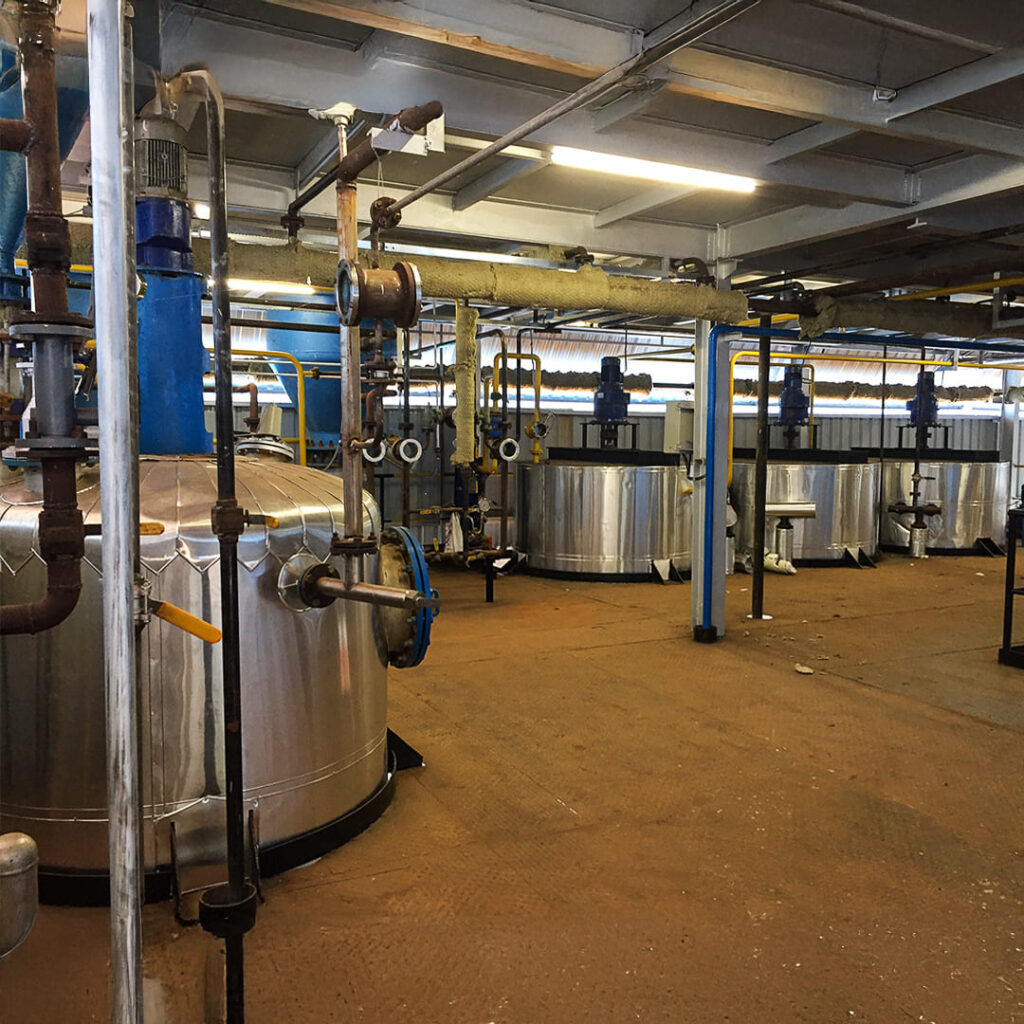
Dry Fractionation
Natural edible oils are multi-component mixtures consisting of various triglycerides. The complex composition partially results in a very broad melting temperature range. Thus, they are unsuitable for different applications in food technology.
Further applications for such fats are possible by fractionating into components with smaller melting temperature ranges. Different fractions can be obtained from a single crude fat.
Fractionated fats and oils can be widely used in nutrition:
The low melting fraction of an edible fat can be used, e.g. as an adequate substitute for conventional salad oils.
The higher melting fraction of an edible fat can be used, e.g. for the production of margarine or shortening.
The mid-fractions can be used as substitutes for the expensive cocoa butter.
Certain special fats such as deep frying oil, diet margarine, shortening, or mayonnaise are preferably made from fat fractions.
In the fractionated crystallization process most frequently used in the industry, the various triglycerides contained in animal or plant fats are separated. The higher melting components are crystallized and the hard fraction is subsequently mechanically separated from the liquid.
The machines and devices for fractionation manufactured by SPARKTECH feature a comprehensive range of applications. All common fats such as palm oil, hardened fish oil, rapeseed oil, soybean oil, and butter fat can be processed.
We recommend the “dry” fractionation process from the melt because this process operates without any additives, resulting in:
Physiologically neutral products, as additives do not cause contamination,
High operational safety, as solvents do not present explosion hazards,
No contamination of the wastewater or exhaust air, as they are completely free of additives,
Dry degumming as the ideal, cost-effective supplement, as no wastewater processing is required for the entire system, and
Fully automatic operation,
High flexibility in the cooling profile design,
Reduced cycle time,
Improved quality,
Higher yield.