
Chemical & Enzymatic Modification
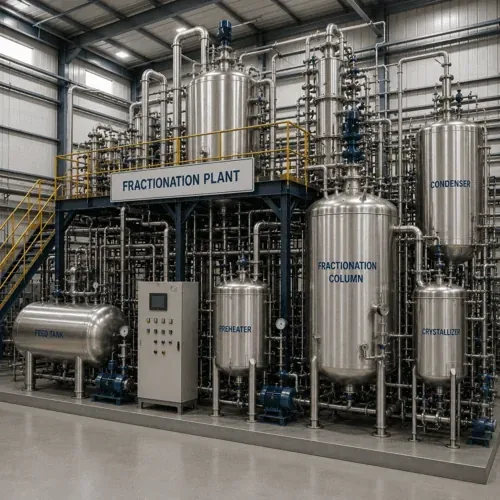
Interesterification Plant
Interesterification is a advanced process used to modify the physical properties of oils and fats by rearranging the fatty acids within the triglyceride molecule, offering a zero-trans alternative to hydrogenation.
Process Flow
Process Overview
Unlike hydrogenation, interesterification does not change the degree of saturation or isomerize the fatty acids, thus creating zero-trans fats.
The process involves the rearrangement of fatty acid chains between and within the triglycerides to achieve desired melting characteristics and nutritional profiles.
Both chemical and enzymatic interesterification options are available to meet various regulatory and functional requirements.
Technological Advantages
Produces fats with excellent plasticity and melting properties for margarine and shortening.
Capable of processing a wide variety of feedstock oils including palm, soy, and sunflower.
Modern plants feature low-impact processing to maintain the natural antioxidants in the oil.
Key Features & Benefits
- Zero-trans fat production
- Chemical & Enzymatic options
- Flexible feedstock handling
- Precise reaction control
- Advanced separation technology
- Nutritional profile optimization
- Low process losses
- Automated control system